Journal Practice
The daily vow: a Stoic practice for becoming who you intend to be
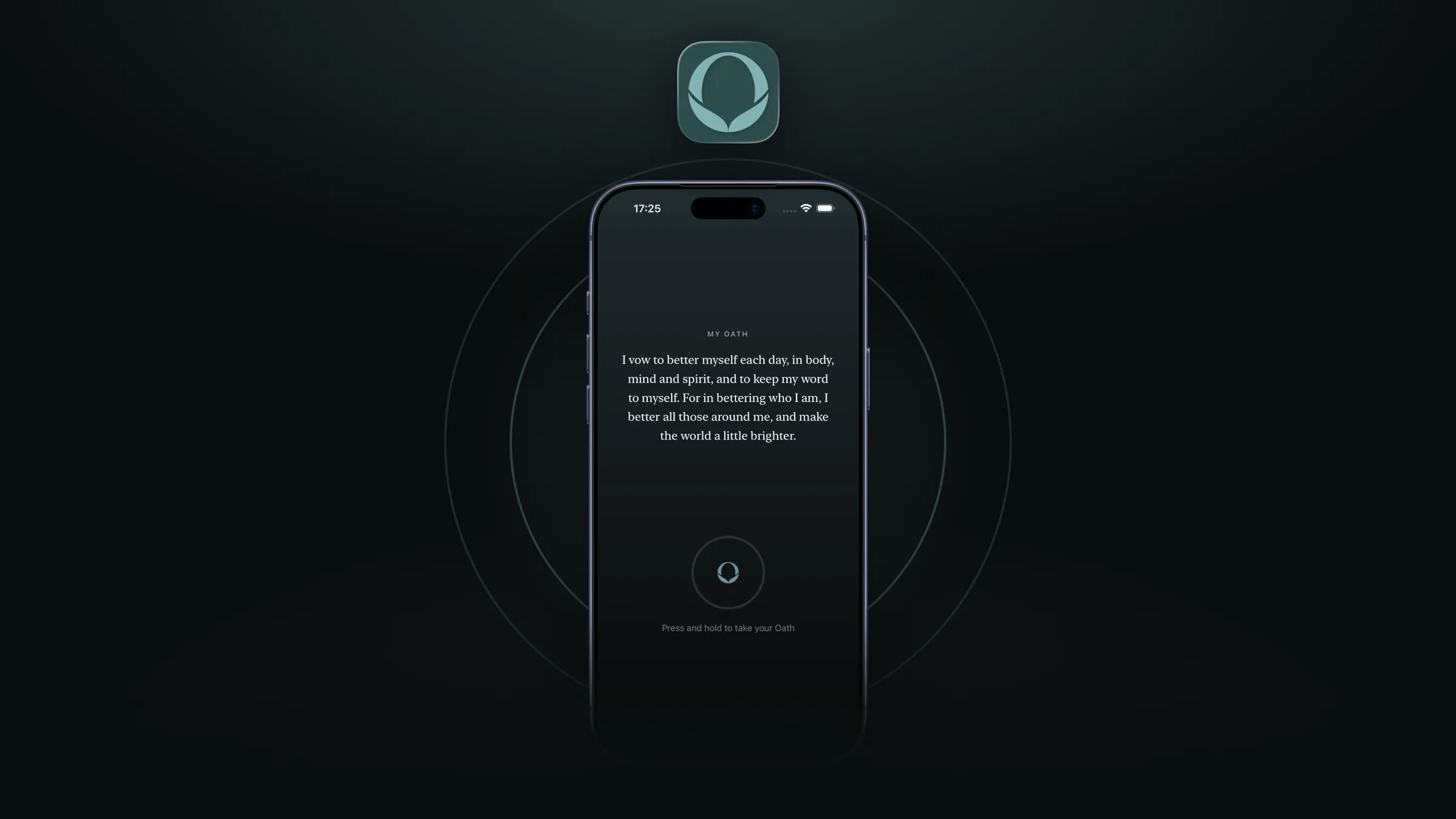
Most self-improvement begins with a goal. Lose the weight, run the distance, read the books. Goals are useful, but they have a weakness: they live in the future. You can miss a goal for weeks before you notice you have stopped chasing it.
A vow is different. A vow lives in the present. It is not a target you hope to hit some day; it is a standard you either kept today or did not. The Stoics understood this well. Marcus Aurelius did not write yearly resolutions. He wrote reminders to himself, every morning, about the person he intended to be that day.
Why writing it down matters
A vow that lives only in your head is negotiable. It softens under pressure, reshapes itself around your excuses, and quietly disappears on the days you need it most.
Writing it down changes its nature. The words become fixed. When you return to them, tired and unwilling, they say exactly what they said on the day you meant them. That is the point. A written vow is a message from your most deliberate self to your least deliberate self.
It does not need to be grand. A good vow is short, personal and honest. It names the person you are trying to become, not the numbers you are trying to hit. One sentence you can stand behind is worth a page you will never reread.
Why renewal beats willpower
The second half of the practice is renewal. Reading your vow once and filing it away achieves little. The practice is returning to it, every day, and making a small deliberate act of recommitment.
In Oath, that act is physical: you press and hold, and your Oath is sealed for the day. It takes a few seconds. Those seconds matter, because they turn intention into behaviour. Psychologists call this an implementation ritual; the Stoics would have called it a morning discipline. Either way, the mechanism is the same. You are not relying on willpower to carry you through the day. You are starting the day by proving, in one small act, that your word still stands.
Streaks grow from there. Not the anxious, gamified kind that punish you for living, but a quiet count of days you showed up. Consistency you can see becomes consistency you protect.
Keeping it when you fall short
You will miss days. Everyone who has kept any practice long enough has broken it. What matters is what the vow says about that. The best oaths include their own mercy: when I fall short, I will begin again.
Falling short is not failing the practice. Refusing to return is. A vow you can return to after a bad week is a vow that can actually change a life, because lives are long and weeks are often bad.
Begin with one sentence
Write one sentence you would be proud to keep for a year. Renew it tomorrow morning. That is the entire practice, and it is enough.
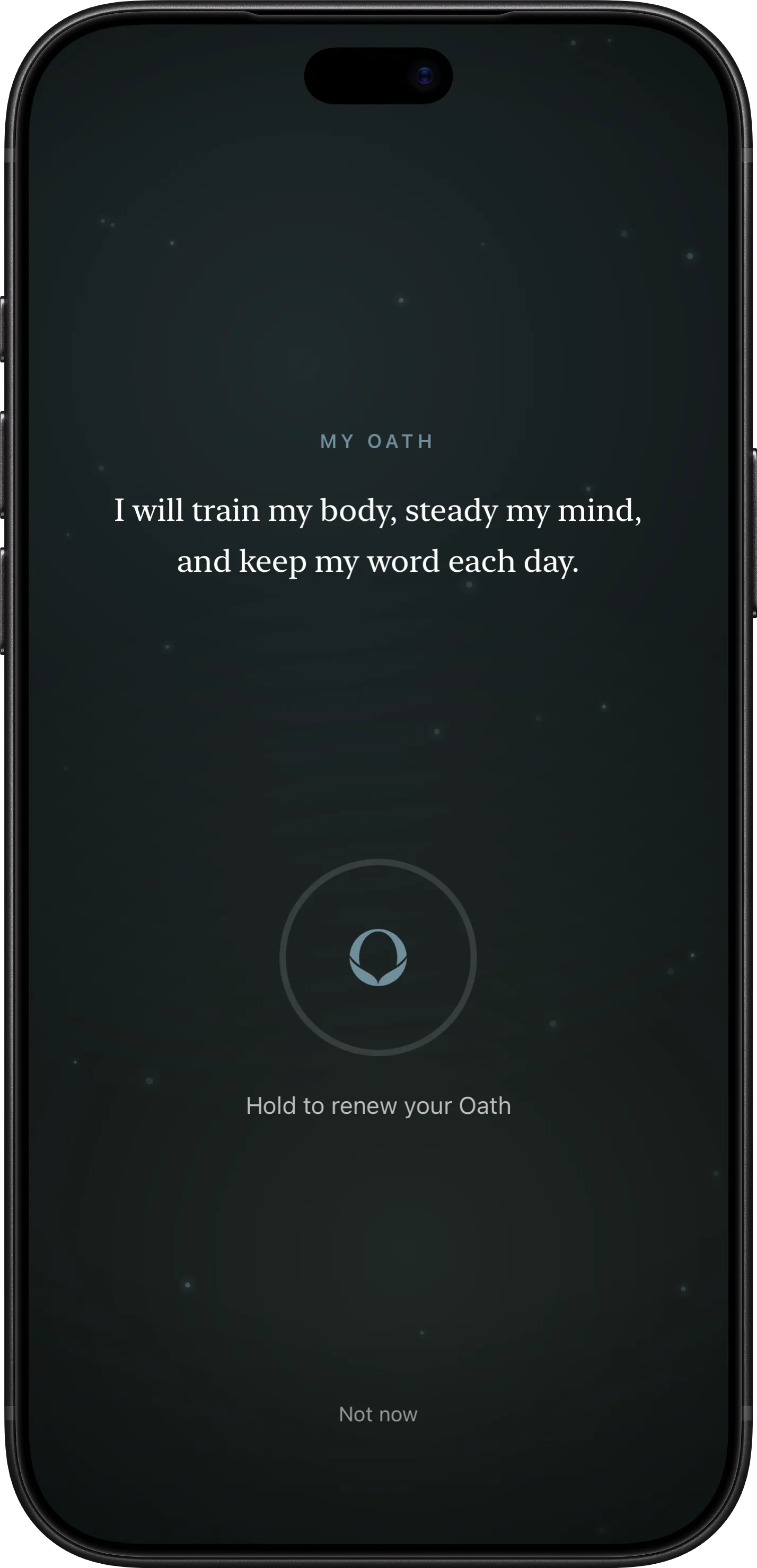
Oath was built around it. You write your vow once, seal it each day, and everything else in the app, the training, the breathing, the quiet records, exists to help you keep it.