Journal Breathe
4-7-8 breathing: the quiet way to downshift
If box breathing is the rhythm for composure, 4-7-8 is the rhythm for letting go. Four counts in, seven held, eight out. Popularised by Dr Andrew Weil and rooted in older pranayama practice, it is the pattern people reach for when the day will not switch off.
The rhythm
- Breathe in quietly through the nose for four counts
- Hold the breath for seven counts
- Exhale slowly through the mouth for eight counts, with a soft whoosh if it helps
Three or four rounds is a full practice, especially at first. This is not a rhythm to run for twenty minutes; it is a lever you pull a few times, then let the body take over.
Why the long exhale matters
The defining feature of 4-7-8 is that the exhale is twice the inhale. A long exhale slows the heart via the vagus nerve, which is why sighing exists and why you do it involuntarily after stress. The seven-count hold lets carbon dioxide rise slightly, which encourages a slower, deeper breath after it. Together they produce a distinct downshift that many people feel from the first round.
That strength is also why it deserves respect. The long hold can feel intense, and light-headedness is common in the first week. If seven counts is too much, use a 3-5-6 or 2-4-4 version of the same shape. The ratio matters more than the numbers.
When to use it
Before sleep. This is where 4-7-8 has earned its reputation. Lying in bed, three or four rounds, then let your breathing return to normal. Do not force sleep to arrive; the practice is finished when the rounds are.
After stress, not during it. In the middle of a difficult moment, box breathing is easier to hold onto. 4-7-8 shines afterwards, when the event is over but your body has not received the message.
After training. A few rounds at the end of a session marks the boundary between effort and rest, the same way a cool-down does for your muscles.
Practising with a guide
Counting to seven while trying to relax is mildly self-defeating, which is why a guide helps more with 4-7-8 than with almost any other rhythm.
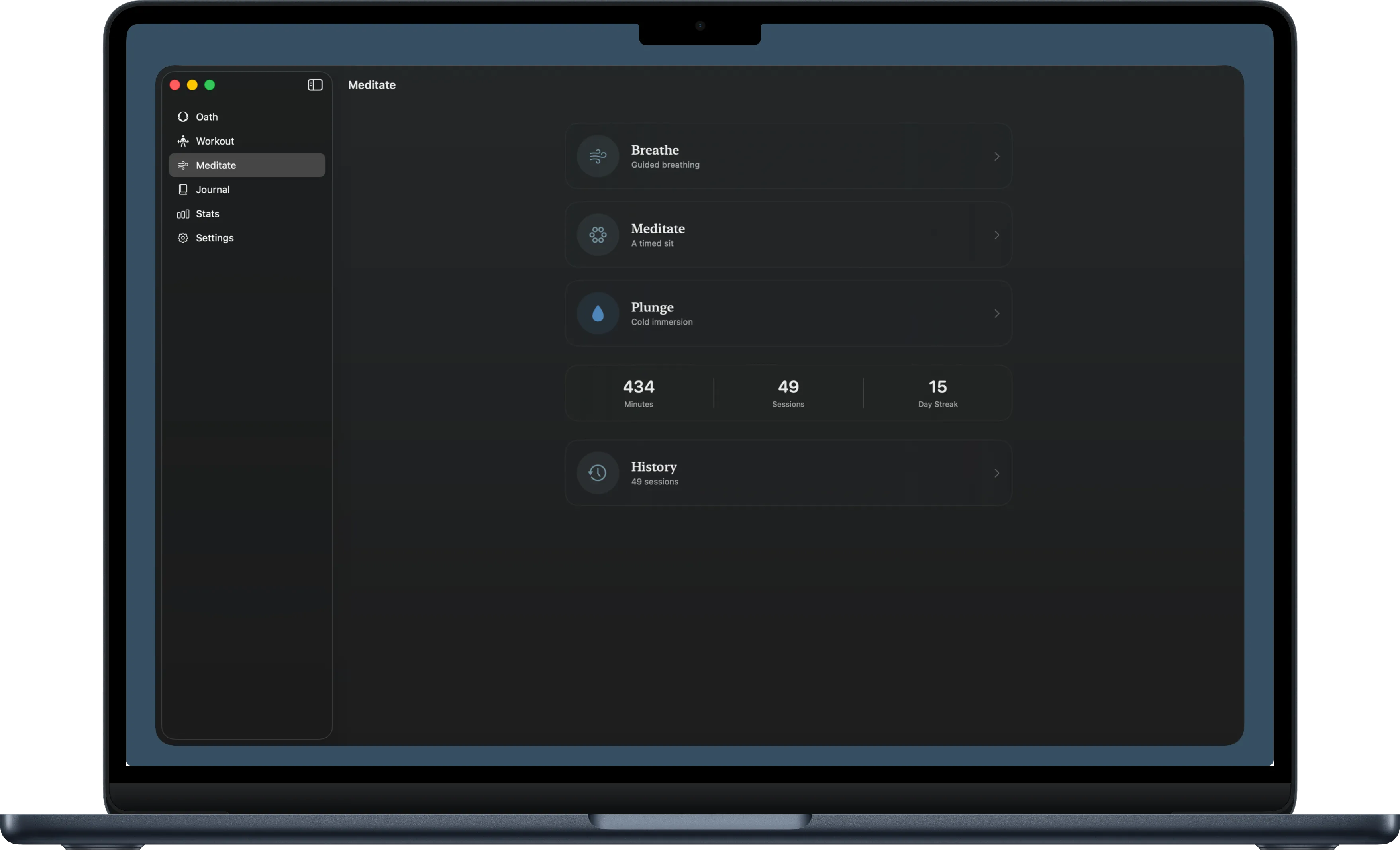
Oath’s breathing orb carries the pattern for you: it fills for four, holds for seven, and empties slowly for eight, with an ambient soundscape underneath if you want one. You stop counting, follow the light, and let the rhythm do its quiet work.
If you would rather try before you install anything, the free 4-7-8 breathing timer on this site runs the same pattern in your browser.
Breath holds are not for everyone. Practise seated or lying down, never in water, and read the health and safety guidance first, especially if you are pregnant or have a heart or respiratory condition.